From Sample to Container: A Practical Buying Process for Welding-Grade Rutile Sand
Purchasing rutile sand for welding electrode production is rarely completed after one quotation.
For most electrode manufacturers, the real buying process begins with a sample, followed by laboratory testing, production trials, specification confirmation and commercial evaluation. Only after these steps can a supplier move from being a possible source to an approved long-term partner.
A lower price may attract attention at the beginning, but stable production requires much more than an attractive quotation. Chemical composition, particle size, batch consistency, packing and shipment control all affect the final purchasing decision.
Below is a practical buying process commonly followed by manufacturers sourcing welding-grade rutile sand.
1. Define the Actual Application Before Requesting a Quote
The first step is to explain how the rutile sand will be used.
Rutile intended for E6013 electrodes may have different requirements from material used in flux-cored wire, submerged arc welding flux or other welding consumables.
A useful inquiry should include:
The type of welding electrode or flux being produced
Required TiO₂ grade
Preferred particle size
Maximum acceptable oversize and fine particles
Estimated trial quantity
Expected monthly consumption
Destination port
This information allows the supplier to recommend the correct grade instead of sending a general quotation that may not match the application.
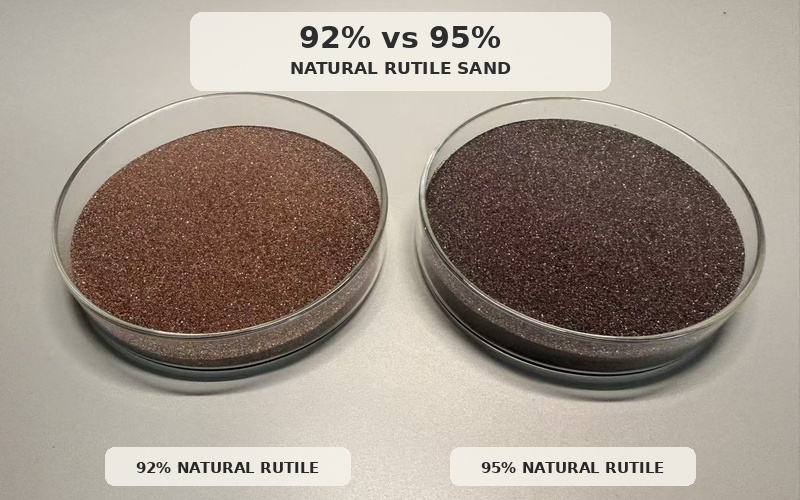
For example, two rutile products may both contain approximately 95% TiO₂, but their particle-size distribution and impurity levels can be different. In welding production, those differences may affect coating extrusion, arc stability, slag formation and electrode appearance.
2. Review the Specification Before Requesting a Sample
A sample should not be sent before the buyer and supplier have reviewed the basic specification.
The supplier should provide a recent certificate of analysis showing the main chemical values, such as:
TiO₂
Total iron
SiO₂
ZrO₂
Sulfur
Phosphorus
Moisture, when required
Particle-size information should also be confirmed separately.
Many purchasing problems occur because the chemical composition is discussed in detail while the sieve requirement is described only as “60 mesh” or “80 mesh.” This wording is not always sufficient.
The buyer should confirm whether the requirement means:
100% passing 60 mesh
A maximum residue on 60 mesh
A controlled percentage below 200 mesh
A specific particle-size distribution range
Clear sieve requirements reduce the risk of receiving material that meets the TiO₂ grade but performs poorly in actual production.
3. Use the Sample to Check More Than the Laboratory Result
Laboratory testing is necessary, but it is not the only purpose of a sample.
The sample should also be checked for:
Colour consistency
Visible foreign particles
Moisture or agglomeration
Flowability
Behaviour during mixing and extrusion
Welding performance in the finished electrode
A chemical report can confirm what is present in the material, but only a production trial can show how the rutile works in the buyer’s formula.
For this reason, manufacturers should avoid approving a supplier based only on a PDF certificate. The sample and the certificate should represent the same material grade and production source.
4. Confirm Whether the Trial Sample Can Be Repeated in Bulk
One of the most important purchasing questions is simple:
Can the supplier reproduce the same quality in the commercial shipment?
A sample may perform well, but the trial result is only useful when the bulk material has comparable chemistry and particle size.
Before placing an order, the buyer should ask:
Is the sample taken from current production?
Will the bulk cargo come from the same source?
How is particle size controlled?
Is each batch tested before packing?
Can a pre-shipment sample be retained?
Will the final COA be issued for the shipped batch?
A reliable supplier should be able to explain how the sample, production batch and final shipment are connected.
This is particularly important for natural mineral products because small variations can occur between batches. The purpose of quality control is not to claim that natural minerals never vary, but to keep the variation within an agreed and workable range.
5. Evaluate the Commercial Offer Correctly
When comparing quotations, buyers should confirm what is included in the price.
A rutile sand quotation may be offered on an EXW, FOB, CFR or CIF basis. The price difference can be significant, especially when freight rates change.
A complete quotation should state:
Product grade
Particle size
Quantity
Packing method
Unit price
Trade term
Loading port
Destination port
Payment terms
Quotation validity
Estimated shipment time
For CIF quotations, buyers should also confirm whether ocean freight, insurance and applicable surcharges are included.
Comparing only the unit price without checking the trade term can lead to a misleading conclusion. A lower FOB price may become more expensive after freight, local charges and insurance are added.
6. Start With a Manageable Trial Order
For a new supplier, a smaller trial order is often more practical than immediately committing to a large annual contract.
The appropriate trial quantity depends on production needs and freight economics. Some manufacturers begin with courier samples, while others require several tonnes or one container for a meaningful plant trial.
A commercial trial order allows the buyer to evaluate:
Bulk consistency
Packing strength
Loading condition
Shipping documents
Delivery time
Communication efficiency
Response to quality questions
The first order is therefore not only a product test. It is also a test of the supplier’s export execution.
7. Confirm Packing Before Production
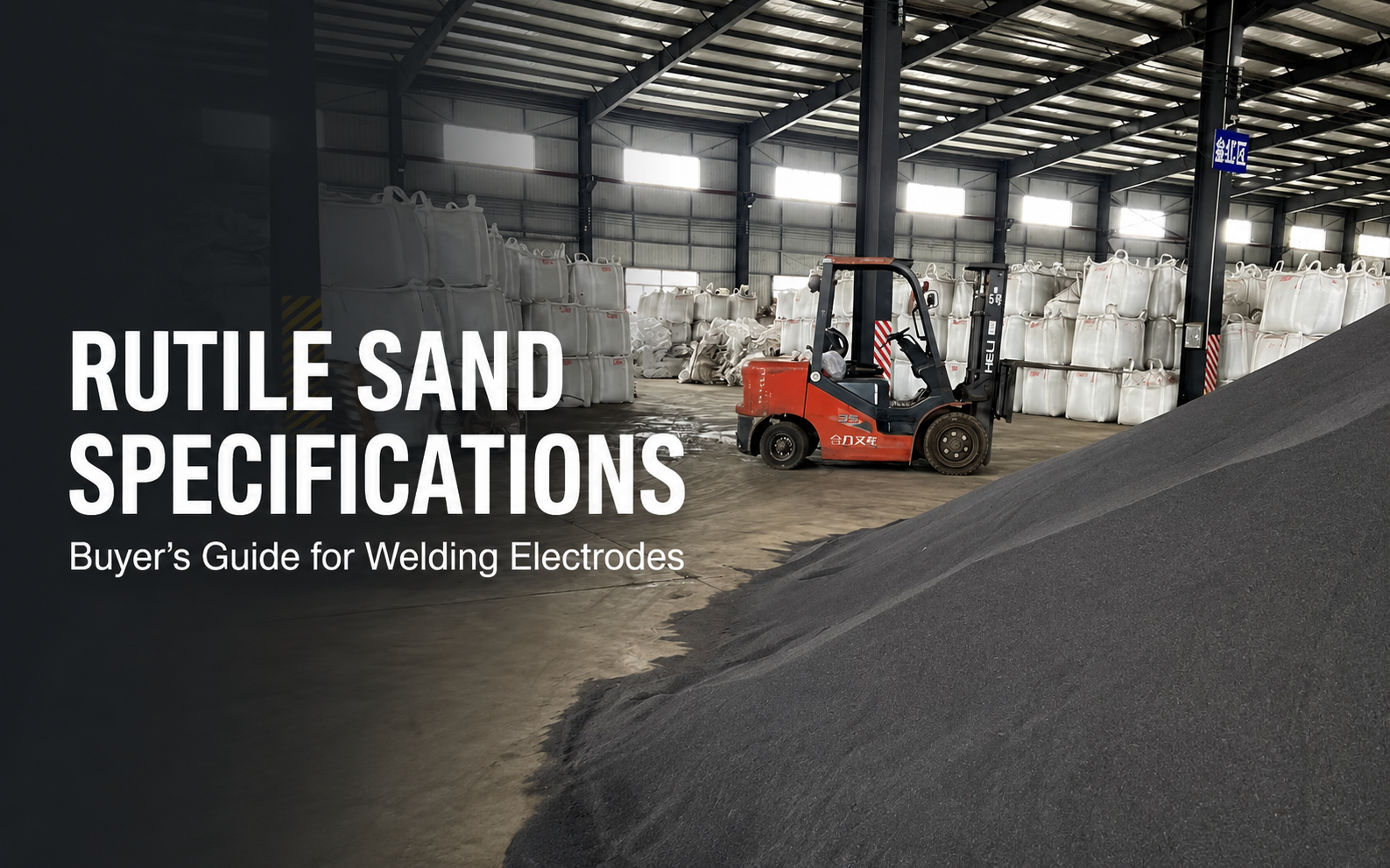
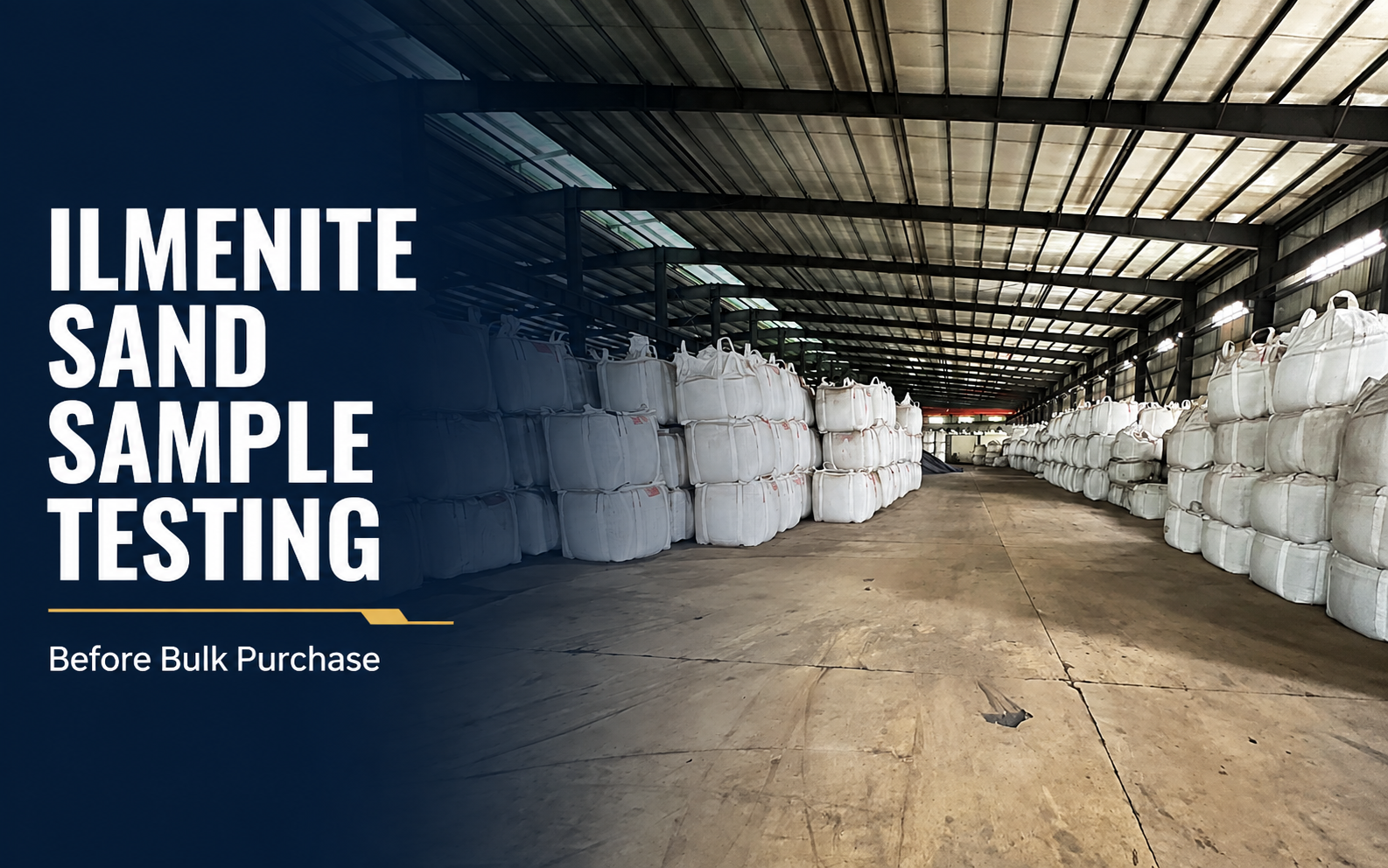
Welding-grade rutile sand is commonly packed in one-metric-ton jumbo bags, although smaller bags may be available for specific requirements.
Before packing, the buyer should confirm:
Net weight per bag
Number of bags
Inner liner requirement
Bag marking
Pallet requirement
Container loading plan
The packing list, commercial invoice and bill of lading should show consistent quantities and weights.
For example, a 20 MT shipment packed in 20 jumbo bags should be described consistently across all documents. Differences between the invoice, packing list and shipping instructions may cause unnecessary questions during customs clearance.
Good packing is especially important for dense mineral products. The bag quality, lifting loops and loading method should be suitable for inland transport, container handling and unloading at the destination.
8. Check the Final Documents Before Shipment
Before the bill of lading is issued, the buyer and supplier should confirm the shipping details carefully.
A typical document set may include:
Commercial invoice
Packing list
Bill of lading
Certificate of analysis
Certificate of origin, when applicable
Insurance document for CIF shipments
Other documents required by the destination country
The following information should be consistent:
Seller name
Buyer name
Product description
Quantity
Net weight
Gross weight
Packing quantity
Port of loading
Port of discharge
Container number
Seal number
Correcting a draft document is much easier than correcting a final bill of lading after issuance.
9. Judge the Supplier by Consistency, Not Only by the First Order
A successful first shipment is important, but long-term cooperation depends on repeatability.
After receiving the cargo, the buyer should compare:
Bulk test results against the approved sample
Actual sieve distribution against the agreed specification
Packing condition on arrival
Delivered quantity
Production performance
Communication and document accuracy
A good supplier should also be willing to discuss feedback after delivery. When minor differences appear, the key question is whether the supplier can identify the cause and improve the next batch.
For welding electrode manufacturers, a stable raw-material source can reduce formula adjustments, production interruptions and repeated testing. That value is often greater than a small difference in purchase price.
Conclusion
Buying welding-grade rutile sand is a step-by-step process.
The most effective purchasing sequence is:
Define the application.
Confirm the specification.
Test a representative sample.
Complete a production trial.
Compare the full commercial offer.
Confirm packing and shipment requirements.
Check the final batch and documents.
Evaluate consistency after delivery.
A supplier should not only provide a competitive price. The supplier should also be able to connect the sample, specification, bulk production, packing and shipping documents into one controlled process.
Hebei Maosheng supplies natural rutile sand for welding electrode and welding material applications. Available grades and particle sizes can be discussed according to the buyer’s formula, production process and destination market.
For specifications, samples or quotations, please contact us with your required grade, particle size, quantity and destination port.