92% vs 95% Natural Rutile Sand: Which Grade Is Better for Welding Electrodes?
92% vs 95% Natural Rutile Sand: Which Grade Is Better for Welding Electrodes?
Natural rutile sand is widely used as a raw material in welding electrode coatings, particularly in rutile-type electrodes such as E6013. When selecting rutile for welding consumables, buyers often compare different TiO₂ grades, with 92% and 95% natural rutile being two practical options.
However, higher TiO₂ content does not automatically mean that one grade is suitable for every electrode formulation. Chemical composition, particle size, consistency and the manufacturer's formulation should all be considered.
What Is the Main Difference Between 92% and 95% Rutile Sand?
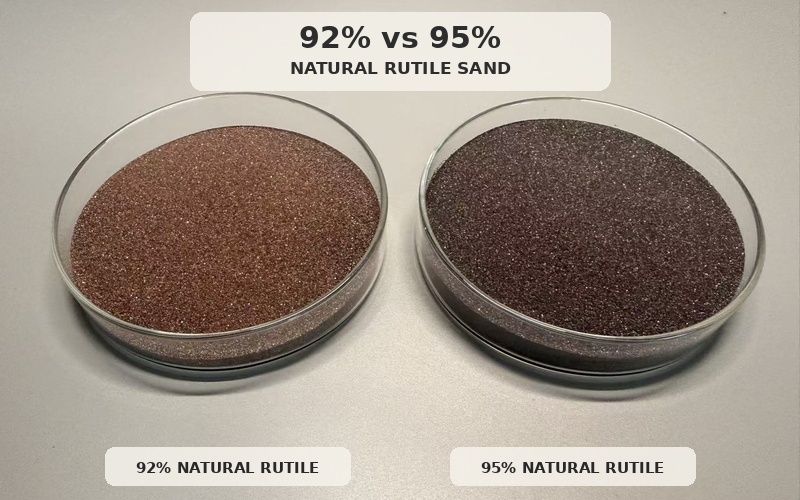
The primary difference is the TiO₂ content.
TiO₂: approximately 95%
Higher titanium dioxide content
Suitable for applications requiring higher rutile purity
Commonly evaluated for welding electrode and welding consumable production
TiO₂: approximately 92%
More economical alternative for suitable formulations
Can be considered where slightly lower TiO₂ content is acceptable
Final suitability should be verified through production testing
Because natural rutile is a mineral product, the exact chemical composition may vary slightly between production batches. Buyers should therefore review the batch COA before shipment.
Why Does TiO₂ Content Matter in Welding Electrodes?
Rutile contributes TiO₂ to the electrode coating system and can influence arc characteristics, slag behavior and overall welding performance.
For this reason, welding electrode manufacturers should not select rutile based only on price. TiO₂ content and impurity levels should be evaluated together with the requirements of the electrode formulation.
A 95% grade may be preferred when a higher TiO₂ level is required, while a 92% grade may offer a cost-effective option when the formulation allows greater flexibility.
Particle Size Is Also Important
Chemical composition is only one part of rutile selection.
Particle size distribution can affect mixing uniformity and consistency during electrode coating production. For many welding applications, controlled particle size is therefore an important purchasing parameter.
Hebei Maosheng can supply welding-grade natural rutile with controlled particle size, including 60 mesh all passing material. Different particle size requirements can be discussed according to the customer's application.
Should You Choose 92% or 95% Rutile?
There is no single grade that is best for every welding electrode manufacturer.
Choose 95% rutile when:
Higher TiO₂ content is required
The formulation has tighter raw-material specifications
Higher-purity natural rutile is preferred
Consider 92% rutile when:
The electrode formulation can accept a lower TiO₂ grade
Cost optimization is important
Laboratory or production trials confirm satisfactory performance
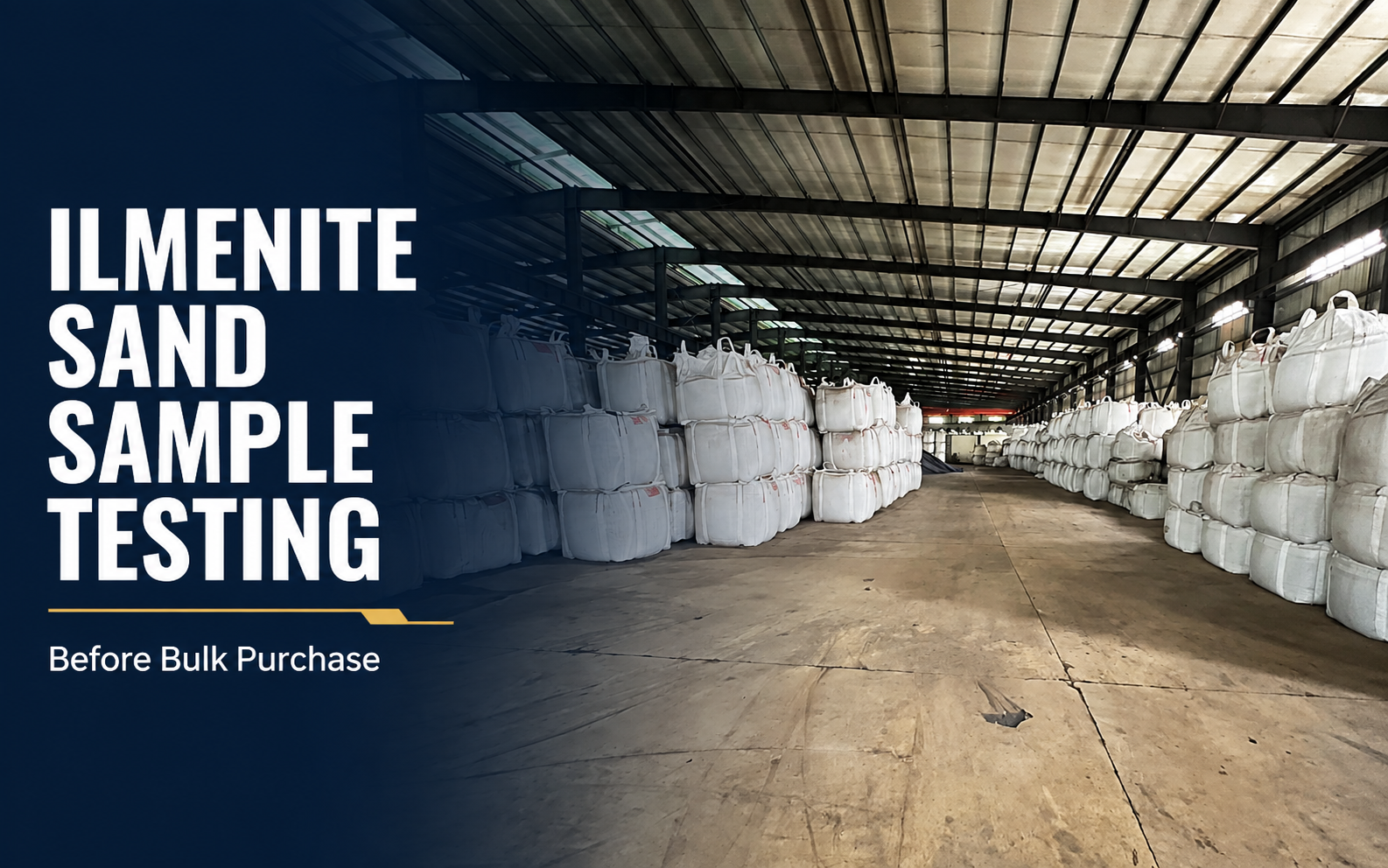
For new suppliers or new rutile sources, sample evaluation is recommended before bulk purchasing.
What Should Buyers Check Before Ordering?
When comparing 92% and 95% natural rutile, welding consumable manufacturers should review:
TiO₂ content
SiO₂ and iron content
Other relevant impurities
Particle size distribution
Moisture
Batch consistency
COA availability
Packing and supply capability
The final selection should be based on the buyer's actual electrode formulation and production test results.
Natural Rutile Supply from Hebei Maosheng
Hebei Maosheng Zirconium Titanium New Material Technology Co., Ltd. supplies natural rutile sand for welding electrode and welding consumable applications.
Our main rutile grades include 92% TiO₂ and 95% TiO₂, with controlled particle size options for industrial use.
For buyers evaluating a new rutile source, samples and batch-specific technical information can be provided for testing before commercial orders.
For specifications, COA, samples or quotations, please contact us with your required TiO₂ grade, particle size, quantity and destination port.