Rutile Sand COA: What Buyers Should Check Before Placing an Order
Rutile Sand COA: What Buyers Should Check Before Placing an Order
A certificate of analysis, commonly called a COA, is one of the first documents buyers request when purchasing rutile sand.
However, checking only the TiO₂ percentage is not enough.
Two rutile sand products may show a similar TiO₂ content on paper but perform differently during welding electrode production. Impurity levels, particle size distribution, moisture and sampling methods can all affect the final result.
Before confirming an order, buyers should review the COA together with the intended application and actual sample performance.
What Is a Rutile Sand COA?
A rutile sand COA is a laboratory report showing the chemical and sometimes physical properties of a specific batch of material.
A typical COA may include:
TiO₂ content
Fe or total iron
SiO₂ content
ZrO₂ content
sulfur and phosphorus
moisture
particle size
loss on ignition
The exact testing items may vary depending on the supplier, origin of the material and customer requirements.
For welding electrode production, chemical composition and particle size are usually the two most important areas to check.
1. Check the TiO₂ Content
TiO₂ content is normally the first specification buyers look at.
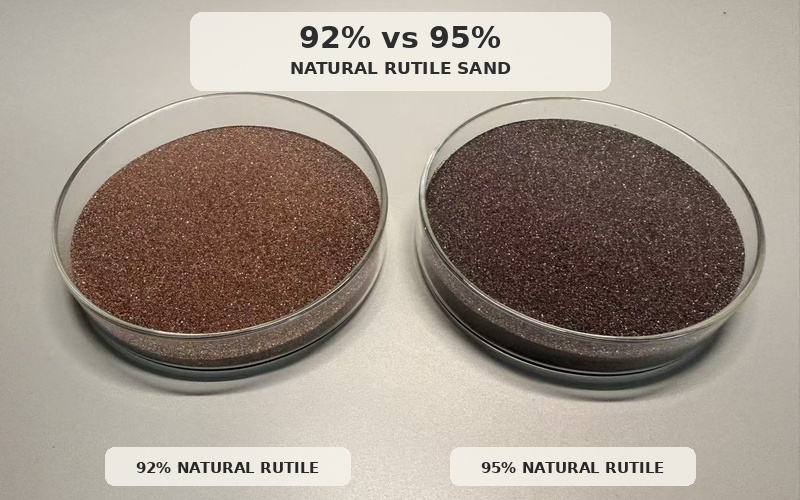
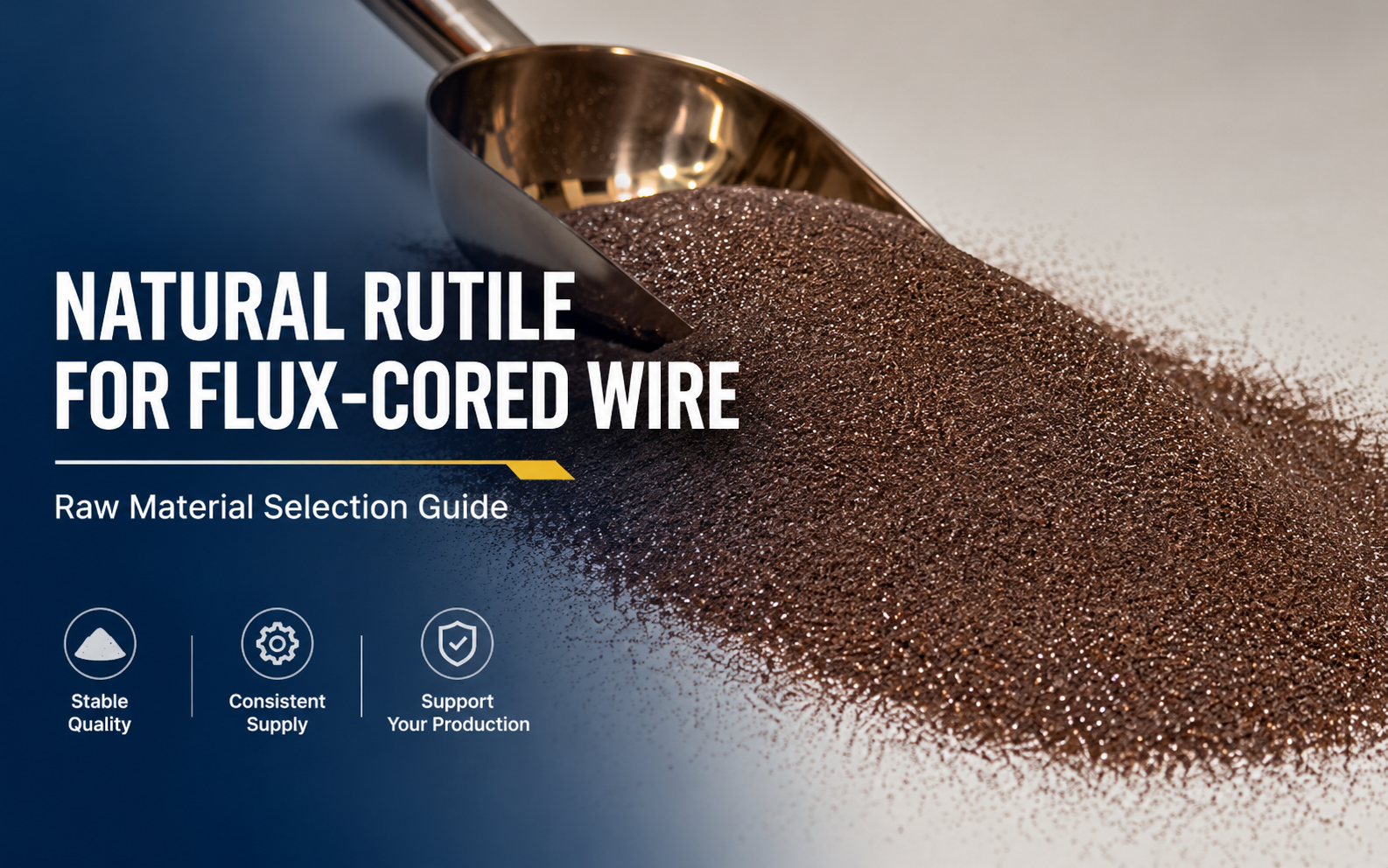
For welding applications, different electrode formulations may require different rutile grades. Some manufacturers use 95% rutile sand, while others may use lower-grade rutile or a combination of rutile and ilmenite.
A higher TiO₂ percentage does not automatically mean the material is suitable for every formula.
The buyer should confirm whether the reported TiO₂ content matches the production requirement and whether the supplier can maintain similar results from batch to batch.
Consistency is often more important than a single high test result.
If you are not sure which rutile grade is suitable for your production process, you may also read our guide on How to Choose Rutile Sand for Welding Electrode Production.
2. Review Iron and Silica Levels
Iron and silica are common components in natural rutile sand.
Their acceptable levels depend on the electrode formulation and the role of rutile in the coating.
High or unstable iron content may influence slag behavior, arc characteristics and the appearance of the finished weld. Silica content may also affect slag fluidity and coating performance.
Buyers should not only ask whether the values meet the target range. They should also compare several batches to see whether the supplier’s quality is stable.
A single COA cannot always represent long-term production consistency.
3. Pay Attention to Zirconium Content
Natural rutile sand may contain a certain amount of zirconium-bearing minerals.
For some applications, this is not a serious concern. For others, the buyer may have a specific limit.
It is therefore useful to check whether the COA lists Zr or ZrO₂ clearly.
The reporting method should also be confirmed. Some laboratories report elemental zirconium, while others report zirconium dioxide. These two values should not be compared directly without understanding the test basis.
4. Confirm Sulfur and Phosphorus
Sulfur and phosphorus are normally present at relatively low levels, but many welding material manufacturers still monitor them carefully.
Even when the values are low, buyers should confirm that the supplier has included them in the test report, especially for customers with strict internal quality standards.
For repeat orders, stable sulfur and phosphorus levels are more reassuring than occasional testing.
5. Do Not Ignore Particle Size
A chemical COA alone does not show how the rutile sand will feed, mix or perform in production.
Particle size can affect:
mixing uniformity
coating extrusion
material flow
moisture absorption
slag formation
electrode surface quality
For this reason, buyers should request a particle size report or sieve analysis together with the chemical COA.
Statements such as “60 mesh” or “80 mesh” may not provide enough information.
It is better to confirm:
the percentage passing the required mesh
the amount of oversized material
the amount of very fine powder
the test method used by the supplier
For example, a product described as 60 mesh may still contain different amounts of fine particles below 200 mesh. This can influence production even if the main mesh requirement is met.
You can also read our article on [How Particle Size Distribution Affects Rutile Sand Performance in Welding Electrodes] to understand this issue in more detail.
6. Check Moisture Before Shipment
Moisture is sometimes missing from basic COA reports, but it can create practical problems during storage and production.
Excess moisture may lead to:
caking inside the bag
poor material flow
unstable weighing
longer drying time
storage problems during humid weather
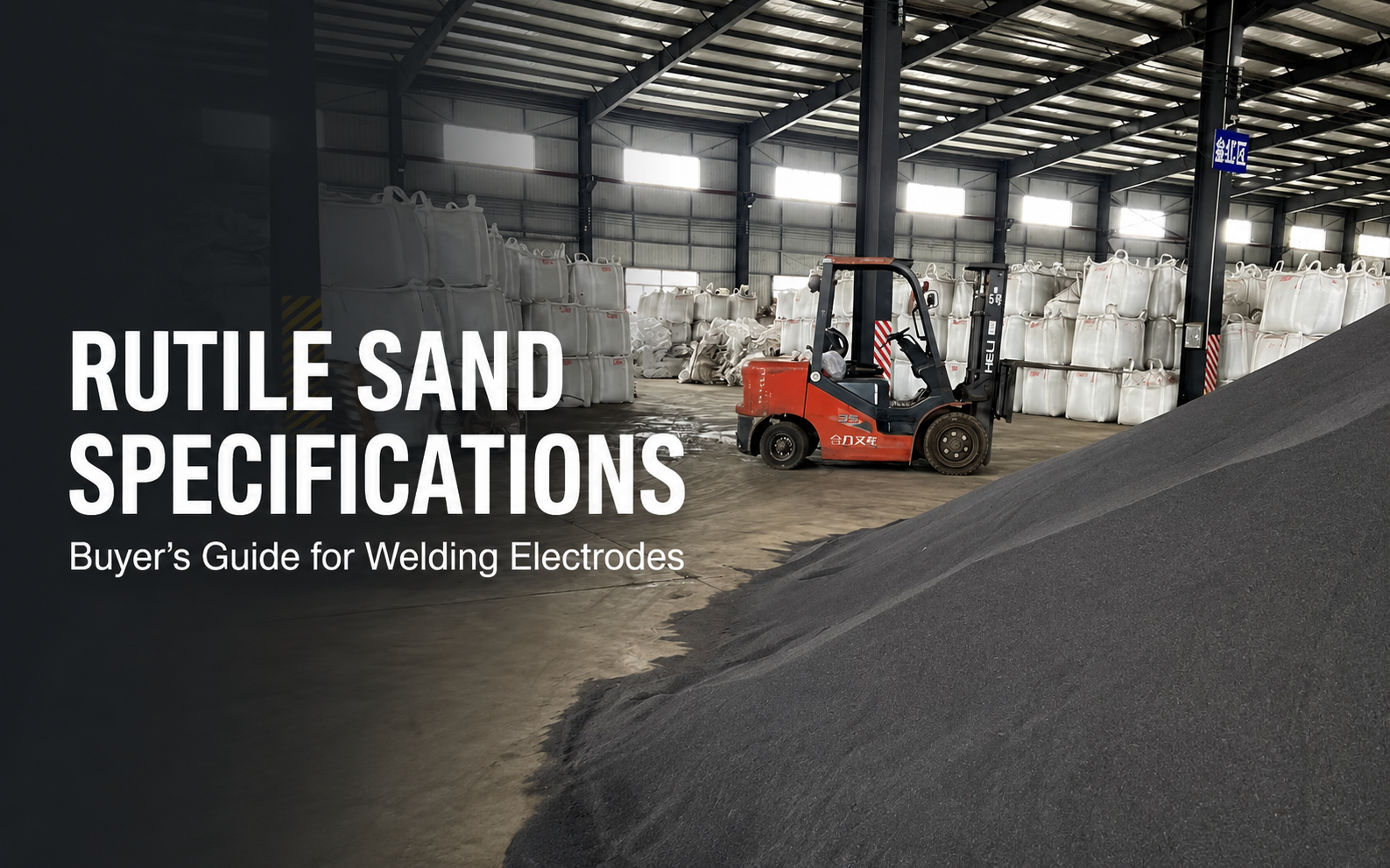
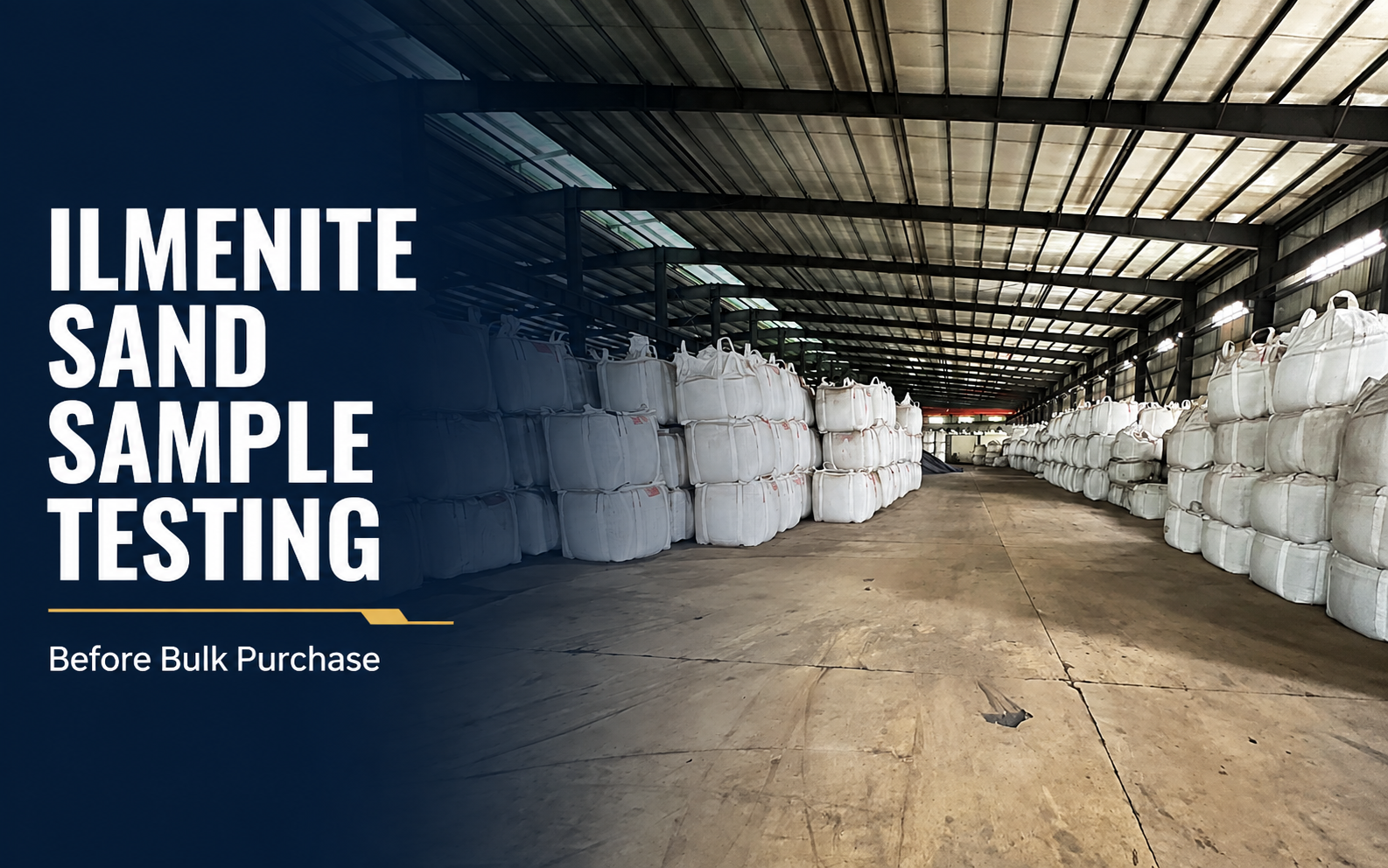
Buyers should ask whether the moisture value was tested before packing and whether the material is stored indoors before shipment.
Packaging condition is also important. Even material with low moisture at the factory may absorb water if the bags are damaged or stored improperly.
7. Ask How the Sample Was Taken
A laboratory result is only useful when the sample represents the actual shipment.
Before relying on a COA, buyers should ask:
Was the sample taken from one bag or several bags?
Was it collected before or after final processing?
Does the report represent the current batch?
Will the shipment be produced from the same material?
For a large shipment, a mixed sample taken from several points is usually more representative than a sample taken from a single bag.
This is especially important for natural mineral products, where minor variations may occur within the same stockpile.
8. Compare the COA With the Physical Sample
The COA should not be reviewed separately from the sample.
A buyer should compare the report with:
color
particle size
visible impurities
flowability
moisture condition
laboratory trial results
For welding electrode manufacturers, a small production test is often more valuable than relying only on chemical data.
A material may meet the written specification but still behave differently in extrusion, drying or welding tests.
9. Confirm Whether the COA Is Batch-Specific
Some suppliers provide a general technical data sheet instead of a batch-specific COA.
These documents are not the same.
A technical data sheet normally shows the typical specification range of a product. A COA should show the actual test results for a particular batch or shipment.
Before placing an order, buyers should confirm which type of document they have received.
For trial orders and repeat shipments, a batch-specific COA provides better traceability.
Questions Buyers Can Ask a Rutile Sand Supplier
Before confirming a purchase, buyers may ask the supplier the following questions:
Is this COA for the current production batch?
Which laboratory performed the test?
Can you provide a particle size report?
Is the sample taken from the same material as the shipment?
Can you provide previous batch results for comparison?
How is the material stored before loading?
Can a third-party inspection be arranged if required?
Clear answers to these questions can help reduce quality disputes after arrival.
COA Review Is Only One Part of Supplier Evaluation
A detailed COA is important, but it should not be the only basis for choosing a supplier.
Buyers should also consider:
batch consistency
sample performance
packaging quality
shipment experience
document accuracy
response speed
ability to handle quality claims
For repeat purchases, stable supply and consistent production control are often more valuable than a slightly lower price.
If you are evaluating multiple suppliers, you may also find our article on Common Problems Caused by Poor Rutile Sand in Welding Electrodes helpful. It explains how inconsistent raw materials can affect electrode quality and production stability.
Hebei Maosheng supplies rutile sand for welding electrode and welding material applications. Chemical analysis, particle size information, packing details and samples can be provided according to customer requirements.
For more information about our welding-grade material, please visit our [95% Rutile Sand for Welding Electrodes] product page or contact us to discuss your required specification.