Natural Rutile Sand vs Synthetic Rutile: What's the Difference?
Natural Rutile Sand vs Synthetic Rutile: What's the Difference?
Rutile sand is an essential raw material widely used in welding electrodes, titanium dioxide production, and various industrial applications. With growing demand in the global market, manufacturers and buyers are often faced with a critical choice: natural rutile sand or synthetic rutile. Understanding the differences between these two types is vital for ensuring product quality, cost-effectiveness, and industrial performance.
What is Natural Rutile Sand?
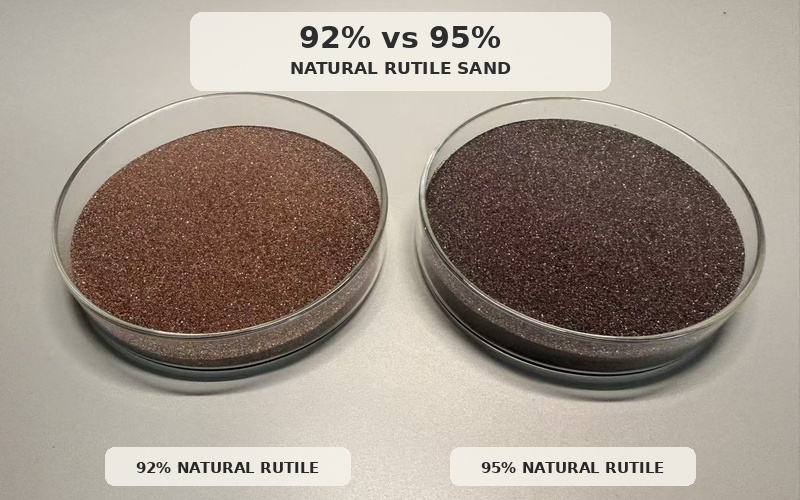
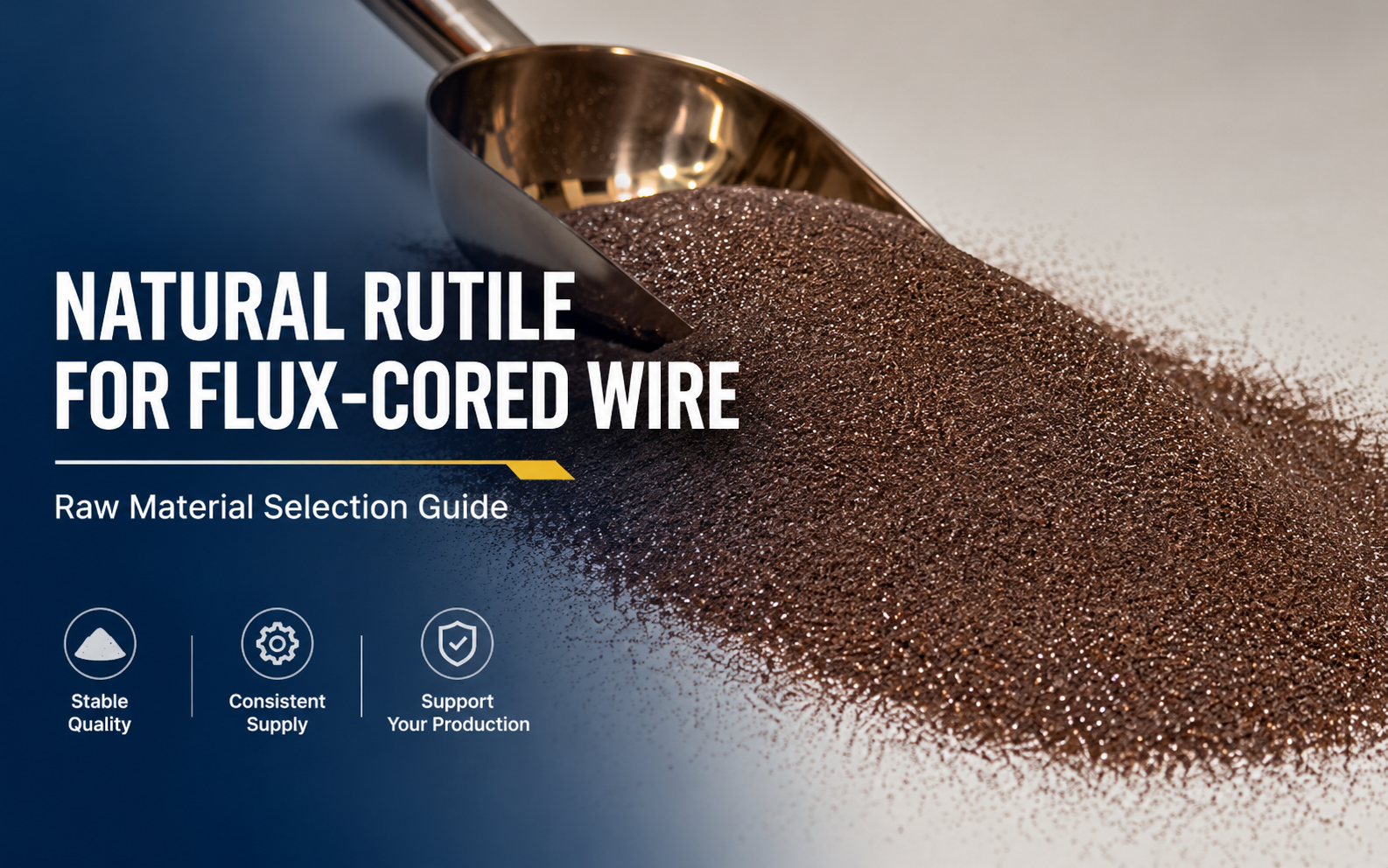
Natural rutile sand is mined from mineral deposits containing high concentrations of titanium dioxide (TiO₂), typically ranging from 92% to 95%. Its naturally occurring crystalline structure provides excellent stability and consistent chemical composition. This type of rutile is highly valued in welding applications due to its ability to improve arc stability, slag removal, and weld bead appearance.
High TiO₂ content – usually above 92%, ensuring high purity.
Low impurities – minimal levels of iron and other contaminants.
Stable particle size – helps maintain consistent performance in welding and other industrial uses.
What is Synthetic Rutile?
Synthetic rutile is produced through the chemical treatment of ilmenite or other titanium-bearing minerals. The process removes iron and other impurities, resulting in a material with higher TiO₂ concentration, typically around 95% to 97%. Synthetic rutile is widely used in pigment manufacturing, especially for high-quality titanium dioxide production.
Higher TiO₂ content – ideal for industrial pigment production.
Controlled chemical composition – reduces variability and improves performance in specialized applications.
Consistent availability – production is not dependent on natural mineral deposits.
Key Differences Between Natural and Synthetic Rutile
| Feature | Natural Rutile Sand | Synthetic Rutile |
|---|---|---|
| TiO₂ Content | 92%–95% | 95%–97% |
| Source | Mined from natural deposits | Produced from ilmenite or titanium ore |
| Impurities | Low, naturally occurring | Very low, controlled during processing |
| Applications | Welding electrodes, industrial uses | Pigment production, specialized industrial applications |
| Cost | Generally lower | Higher due to processing and refinement |
Choosing the Right Rutile Sand
Selecting the right rutile sand depends on the intended industrial application:
Welding electrodes: Natural rutile sand is often preferred because of its crystalline structure and stable particle size, which improves arc performance.
Pigment and titanium dioxide production: Synthetic rutile is better suited due to its higher TiO₂ content and lower impurities.
Industrial ceramics and refractory: Both natural and synthetic rutile can be used depending on purity and cost considerations.
Conclusion
Natural and synthetic rutile sand each have distinct advantages and specific industrial applications. Manufacturers and buyers should carefully assess their production needs, TiO₂ requirements, and cost considerations before making a choice. At Hebei Maosheng Zirconium Titanium New Material Technology Co., Ltd. we supply high-quality natural rutile sand, synthetic rutile, ilmenite, and zircon sand to meet diverse industrial demands. Our products ensure consistent quality, reliable supply, and technical support to help clients achieve optimal results.